




How to Plan a Trip: Flights, Hotels, Cruises, Car Rentals and Tour Packages
Planning a vacation? Learn how to choose a destination, set a travel budget, book flights and hotels, compare cruises and car rentals, and organize tour packages for a smoother trip.
Last updated Oct 17, 2026
Planning a trip should be exciting, not overwhelming. Whether you are organizing a family vacation, a romantic getaway, a cruise holiday, a solo adventure, or a business trip, making the right arrangements can help you save time, manage your budget, and enjoy a smoother travel experience.
The challenge is knowing where to start. You need to choose a destination, decide when to travel, compare flight prices, find suitable accommodation, arrange transportation, and decide which activities are worth booking in advance.
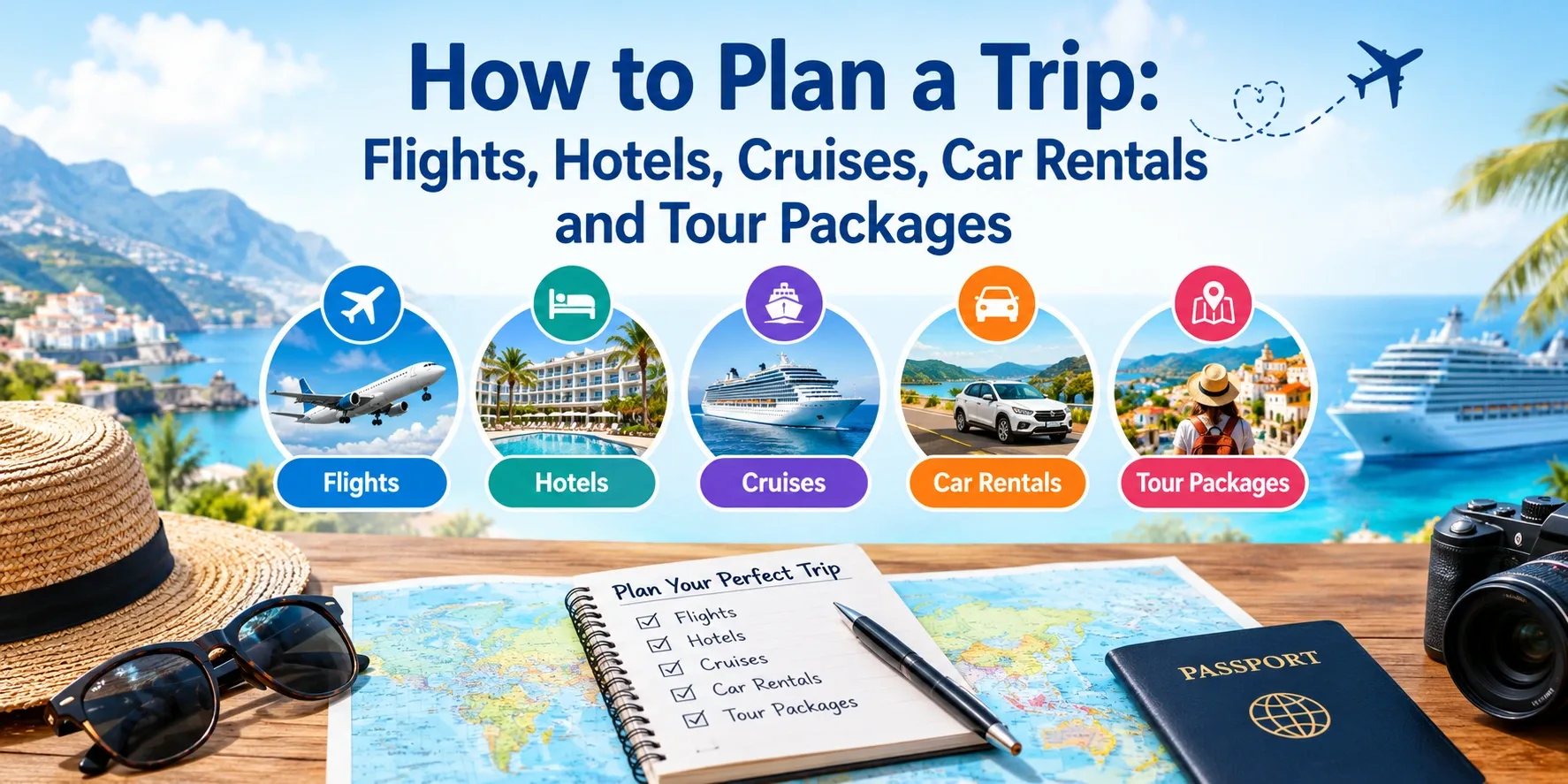
This travel planning guide explains how to plan a trip from start to finish, including flights, hotels, cruises, car rentals, and tour packages. You will also learn how to build a realistic travel budget, avoid common booking mistakes, and organize your itinerary around your needs.
Start With Your Destination and Travel Dates
Before booking anything, decide what kind of trip you want to take. Your destination, travel dates, available time, and personal interests will influence nearly every other decision.
Think about whether you want a relaxing beach vacation, a city break, an outdoor adventure, a family holiday, or a trip that includes several destinations. Consider the season, expected weather, local events, and how much time you have available.
If you are flexible about your destination, compare a few places that fit your interests and budget. If you already have a destination in mind, look at different travel dates to understand your options.
For international travel, remember to check passport validity, visa requirements, entry conditions, and any destination-specific travel guidance before making nonrefundable bookings.
Create a Travel Budget Before Booking
A clear travel budget helps you decide where to spend more and where you can save. Instead of looking only at the flight price, estimate the cost of the entire trip.
Include the main expenses:
Flights or other long-distance transportation
Hotel accommodation or vacation rentals
Cruise fares, if applicable
Rental cars, public transportation, and airport transfers
Food, sightseeing, and activities
Baggage fees, travel insurance, and booking-related charges
An emergency allowance for unexpected expenses
The right budget depends on your destination, trip length, travel style, and group size. A short city break will have different expenses from a two-week international vacation or a cruise holiday.
Compare the total expected cost rather than assuming that the cheapest individual booking will make the entire trip cheapest. For example, a hotel farther from the attractions might cost less per night but require more spending on transportation.
Compare Flights and Choose the Right Itinerary
Flights are often one of the first major bookings travelers make, especially when traveling internationally. Once you know your approximate dates and destination, compare flight options that fit your schedule and budget.
Look beyond the headline fare. Review departure and arrival times, the total journey duration, baggage allowances, seat selection fees, layovers, and ticket change conditions.
A nonstop flight may be worth paying more for if it saves significant time. A connecting flight may offer better value if the layover is manageable and the savings justify the longer journey.
Before confirming your ticket, double-check passenger names, travel dates, airport codes, and the final price. Keep your booking confirmation somewhere accessible.
If you are new to booking airfare, Vaavia's flight booking guide can help you understand the main things to consider when choosing a flight.
Choose a Hotel That Fits Your Trip
Your accommodation affects your comfort, schedule, and overall travel expenses. The best hotel is not necessarily the most expensive one or the property with the most amenities. It is the one that suits your plans.
Start by deciding where you want to stay. If you plan to visit museums, restaurants, beaches, or city attractions, compare hotels based on their location and transportation access. A well-located hotel may help you spend less time commuting.
Check the following before booking:
Total price, including taxes and applicable fees
Room type, occupancy limits, and included amenities
Check-in and check-out times
Cancellation and refund conditions
Recent guest reviews and the property's location
Parking, breakfast, Wi-Fi, or other features you need
For a family vacation, room size and convenient facilities may be particularly important. For a business trip, proximity to meetings or reliable transportation might matter more.
Compare accommodation options for your destination through Vaavia Hotels, and review the specific terms of any property before completing your reservation.
Decide Whether a Cruise Vacation Is Right for You
A cruise can be a convenient way to visit several destinations while staying in the same cabin throughout the voyage. It may suit travelers who enjoy onboard entertainment, organized activities, and visiting multiple ports without arranging separate hotels for every stop.
Before choosing a cruise, consider the itinerary, sailing dates, departure port, cabin category, and length of the voyage. Think about whether you prefer a family-friendly experience, a relaxing sailing, or a trip focused on exploring destinations.
It is also important to understand what the fare includes. Depending on the cruise line and package, some dining options, drinks, gratuities, shore excursions, Wi-Fi, or other services may cost extra.
Calculate the full cost of the cruise, including transportation to the departure port, any hotel stay before sailing, excursions, and other expenses you expect to incur.
If you are considering your first voyage, read Vaavia's guide to booking a cruise for the first time before deciding which cruise fits your plans.
Arrange Transportation at Your Destination
Your transportation plan can affect how much you spend and how easily you get around. Depending on your destination, you might use public transit, taxis, rideshare services, airport transfers, or a rental car.
A rental car can be useful if you plan to visit multiple towns, explore areas outside a city, or travel at your own pace. In a city with convenient public transportation and limited parking, renting a car may be unnecessary.
Before reserving a rental car, compare the total cost and check the following:
Rental price, taxes, and additional fees
Insurance options and coverage conditions
Mileage limits and fuel policy
Pickup and return locations and times
Driver age requirements and accepted documents
Parking costs and local driving rules
For international travel, check whether your driver's license is accepted and whether an International Driving Permit is required. Confirm the applicable requirements with the relevant authorities and rental company.
If a car suits your itinerary, explore options through Vaavia Car Rental. Compare the rental terms carefully before confirming your booking.
Consider a Tour Package for a More Organized Trip
A tour package can bring together parts of your vacation, potentially including flights, hotels, transportation, sightseeing, or guided activities. It can be useful if you prefer to organize several travel arrangements together rather than booking every element separately.
Packages vary considerably, so check exactly what is included. Some cover accommodation and selected activities, while others may include flights, transfers, or guided excursions. Do not assume that meals, entrance tickets, baggage, or airport transfers are automatically included.
Compare a package's total price with the cost of arranging the same services individually. Consider the schedule, flexibility, cancellation conditions, group size, and amount of free time.
A package may be a good fit for a first international trip, a family vacation, or a destination where you would prefer help organizing transportation and activities. Independent booking may be more suitable if you want complete flexibility over every part of the itinerary.
You can explore available options through Vaavia Tour Packages, then review the specific itinerary and inclusions before booking.
Build a Realistic Travel Itinerary
Once the main arrangements are in place, create a practical itinerary. The goal is to organize your time without scheduling every minute of the trip.
Start with fixed commitments such as flights, hotel check-in times, cruise departure times, and prepaid tours. Then group nearby attractions together to reduce unnecessary travel between locations.
Leave time for meals, rest, transportation, and unexpected changes. If you are traveling with children or older family members, allow additional time between activities.
For a multi-city vacation, decide how many nights you want to spend in each destination before reserving accommodation. Check travel times between cities and avoid planning activities that depend on unrealistic connections.
Save your flight details, hotel confirmations, rental car information, tour reservations, and important contact numbers in one accessible place. Keep copies of essential documents available securely in case you need them while traveling.
Prepare Travel Documents and Important Details
A well-planned itinerary is only part of a successful trip. Before departure, confirm that your travel documents and reservations meet the requirements for your destination.
For international travel, review passport validity rules, visa or electronic travel authorization requirements, and entry conditions for every country on your itinerary. Requirements can differ depending on your nationality, destination, and transit route, so verify them through official government sources.
Check whether travel insurance is appropriate for your trip. Review the policy carefully to understand its coverage, exclusions, medical provisions, and cancellation conditions.
Also confirm baggage rules, airport arrival recommendations, transportation arrangements, and any special requirements for children or travelers who need assistance.
A final review a few days before departure can help you catch missing documents, booking errors, or schedule changes before they become urgent problems.
Common Trip Planning Mistakes to Avoid
Even a carefully planned vacation can become more expensive or stressful if important details are overlooked.
Booking based only on the lowest price: Compare total costs, included services, and restrictions before choosing flights, hotels, cruises, or rental cars.
Leaving too little time between connections: Check the connection details and allow for airport transfers, immigration, baggage collection, and other requirements where applicable.
Ignoring cancellation policies: Understand the conditions before making a reservation, especially if your plans may change.
Overloading the itinerary: Too many activities can leave little time to rest or enjoy each destination. Prioritize what matters most.
Forgetting local transportation: Estimate how you will travel between the airport, hotel, attractions, and other stops.
Not checking travel requirements: Confirm current passport, visa, entry, driving, and insurance requirements using relevant official sources.
Avoiding these mistakes can help you make better-informed decisions and enjoy a more organized trip.
Final Trip Planning Checklist
Before you leave, review the essentials:
Destination, dates, and travel budget are confirmed.
Flights and passenger details have been checked.
Hotel reservations and cancellation conditions are understood.
Cruise details, if applicable, have been reviewed.
Rental car or local transportation arrangements are organized.
Tour bookings and activity reservations are confirmed.
Passports, visas, and required travel documents are ready.
Travel insurance and relevant emergency contacts have been reviewed.
Booking confirmations and itinerary details are accessible.
Bags are packed according to airline and destination requirements.
You do not need to plan every detail perfectly. Focus on the important arrangements first, keep your budget realistic, and leave enough flexibility to enjoy the experience.
Plan Your Next Trip With Vaavia
Planning a vacation becomes easier when you know what you need and compare your options carefully. From flights and hotels to cruises, car rentals, and tour packages, each part of your journey should fit your destination, schedule, budget, and travel preferences.
Vaavia provides travel booking options to help you explore arrangements for your next getaway. Start with your destination and dates, compare the services that suit your plans, and review the details before confirming each booking.
Visit Vaavia to explore your travel options and start planning your next trip.
Frequently Asked Questions
How do I plan a trip from start to finish?
Start by choosing your destination and approximate dates, then set a budget. Compare flights, choose accommodation, organize transportation, and reserve any cruises or tours that fit your plans. Finish by creating a realistic itinerary and checking travel documents, booking confirmations, and entry requirements.
What should I book first when planning a vacation?
Start with your travel dates, destination, and budget. Flights and accommodation are often the first major reservations, but the best order depends on your trip. For a cruise, check sailing dates and availability early. Confirm that your key arrangements work together before booking nonrefundable services.
Is it better to book flights and hotels together?
It depends on the trip and the available offers. A combined booking may be convenient, but separate reservations can sometimes provide more flexibility. Compare the complete price, cancellation terms, baggage conditions, and included services before deciding.
Are tour packages worth it?
Tour packages can be useful when you want several arrangements organized together, particularly for a complex destination or a first-time international trip. Compare the package price with the cost of booking the services separately, and check the itinerary, inclusions, flexibility, and cancellation conditions.
How do I choose between a cruise and a land vacation?
Consider the destinations you want to visit, the type of activities you enjoy, your budget, and how much flexibility you want. A cruise combines onboard accommodation with visits to selected ports, while a land vacation may give you more control over where you stay and how long you spend in each place.
Should I rent a car while traveling?
A rental car may be useful for road trips, rural destinations, or itineraries with several stops. It may be less practical in cities with good public transportation or expensive parking. Compare rental costs, insurance conditions, fuel, parking, and local driving requirements before deciding.