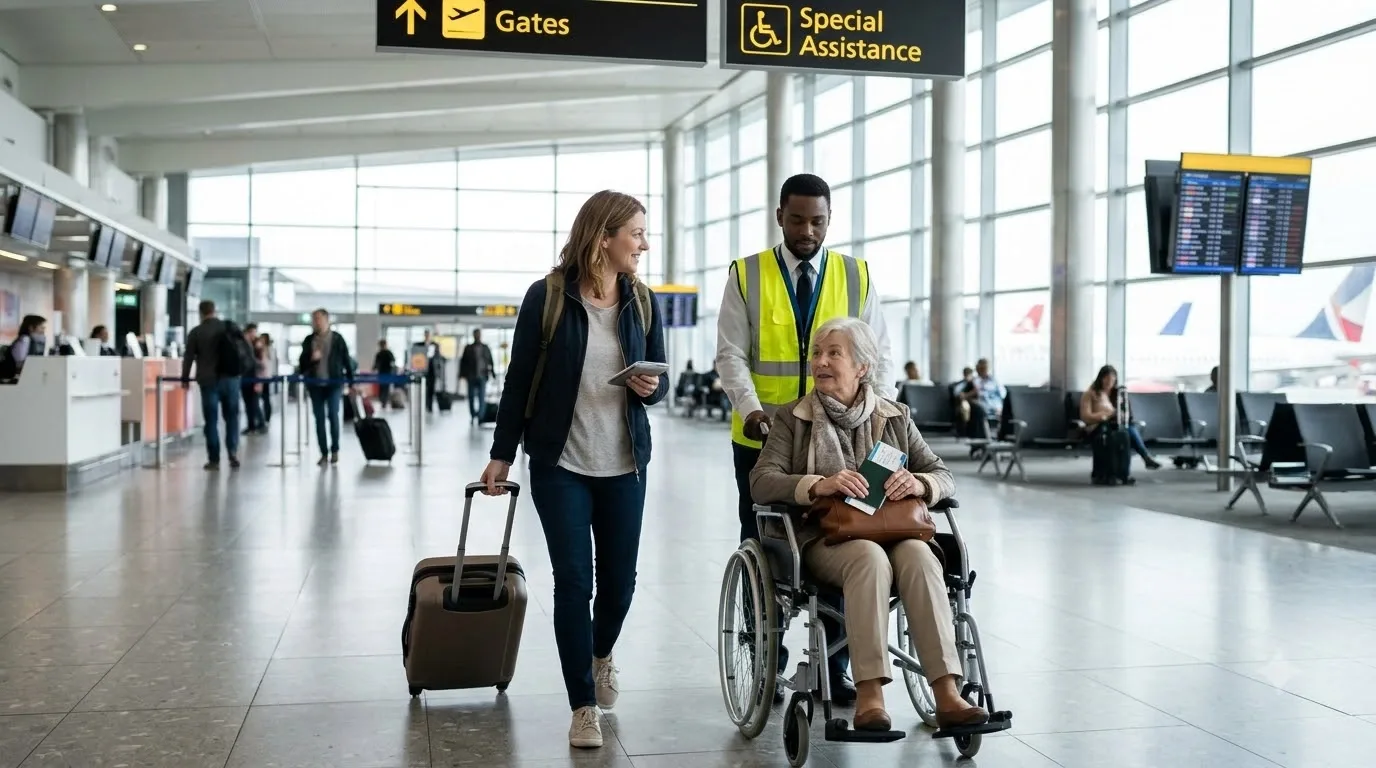





How to Request Wheelchair Assistance When Booking a Flight
Learn how to request wheelchair assistance when booking a flight, choose the right assistance service, prepare for airport security, and plan a comfortable journey.
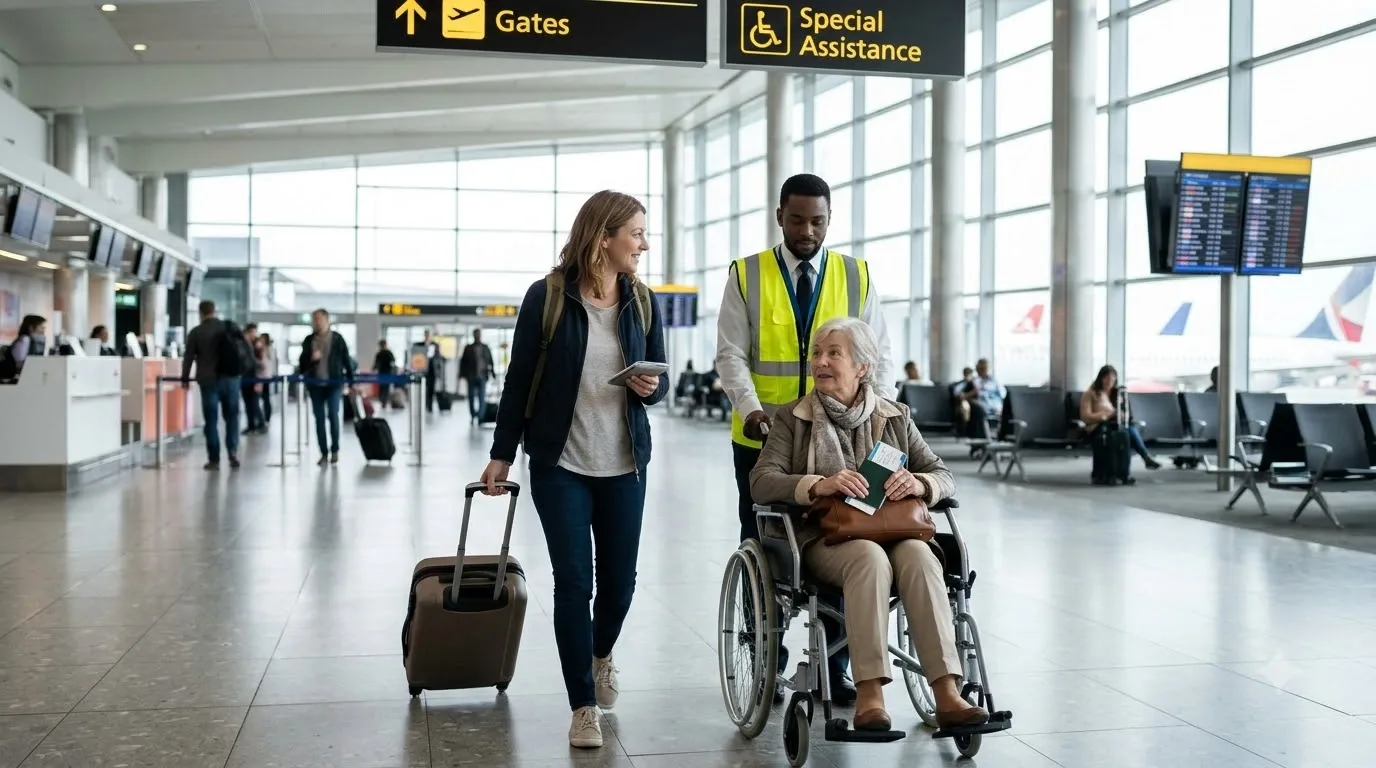
Last updated Oct 27, 2026
Booking a flight can require extra planning when you or someone you are traveling with has limited mobility. Whether a passenger uses a wheelchair every day, has difficulty walking long distances, or needs assistance moving through an airport, arranging the right support in advance can make the journey easier to manage.
Many travelers are unsure how to request wheelchair assistance when booking a flight. They may wonder whether they need to bring their own wheelchair, how to arrange help at the airport, whether assistance is available during connections, or whom to contact after purchasing a ticket.
The good news is that passengers can generally request mobility assistance through the airline or booking provider, subject to the applicable arrangements and requirements. The key is to explain the passenger's actual needs, submit the request as early as possible, and confirm the arrangements before traveling.
This guide explains how to request airport wheelchair assistance, what the different assistance levels mean, how to prepare for departure and connecting flights, and what to check before confirming a reservation.
What Is Wheelchair Assistance When Flying?
Wheelchair assistance is a service designed to help passengers who have difficulty walking or moving through an airport. Depending on the passenger's needs and the arrangements available, assistance may include wheelchair transportation through the terminal, help reaching the check-in area or departure gate, and support with boarding or moving between connecting flights.
The exact service depends on the airport, itinerary, airline procedures, and the passenger's mobility requirements.
Wheelchair assistance does not necessarily mean that a passenger needs a wheelchair throughout the entire journey. Some people can walk short distances but need help covering long airport corridors. Others may need assistance with boarding or transferring between different areas of the airport.
When making a reservation, describe the assistance required instead of simply assuming that every wheelchair request provides the same service.
Who Should Request Airport Wheelchair Assistance?
Wheelchair assistance may be useful for different travelers, including:
Passengers who use a manual or powered wheelchair.
Travelers who have difficulty walking long distances.
Older passengers who need support moving through large airports.
People recovering from an injury or surgery who have temporary mobility limitations.
Passengers who can walk short distances but need assistance reaching the gate.
Travelers who require mobility support during connecting flights.
A passenger does not necessarily need to use a wheelchair every day to request airport mobility assistance. The important factor is the help they need for the journey.
If you are arranging travel for an older family member, review this guide to booking flights for senior travelers to help plan their journey.
How to Request Wheelchair Assistance When Booking a Flight
The process is usually straightforward if you prepare the necessary information before starting your reservation.
Step 1: Check the Passenger's Mobility Requirements
Before booking, discuss the journey with the passenger and identify where they may need help.
For example, consider whether the passenger:
Can walk independently through the airport.
Can walk short distances but needs a wheelchair for longer distances.
Needs assistance reaching the aircraft gate.
Requires help during boarding or when leaving the aircraft.
Has a personal wheelchair that must be transported.
Will need assistance at connecting airports.
These details help you communicate the passenger's needs accurately when making the request.
Avoid selecting an assistance category based only on the passenger's age or diagnosis. Focus on what they can comfortably do and the support they require.
Step 2: Choose a Suitable Flight Itinerary
When comparing flights, consider more than the departure time and ticket price. Airport layout, connection time, the number of transfers, and the amount of walking required may all affect the passenger's experience.
A nonstop flight may reduce the need to move between aircraft and navigate a connecting airport. However, nonstop services are not always available for every route or date.
You can compare available nonstop flight options when a direct itinerary is suitable for the journey.
If a connecting flight is necessary, allow enough time for the passenger to receive assistance and move between gates. The appropriate connection time depends on the airports, itinerary, and any additional procedures required.
Step 3: Request Wheelchair Assistance During Booking
During the booking process, look for a section labeled special assistance, accessibility, reduced mobility, or a similar term. The exact wording and location can differ between booking channels.
Select the assistance option that most closely matches the passenger's needs. If the available options are unclear, contact the airline or booking provider before completing the reservation.
When requesting assistance, be ready to explain:
Whether the passenger needs a wheelchair throughout the airport.
Whether they can walk short distances.
Whether they can use stairs, if relevant.
Whether they need help reaching the aircraft or during connections.
Whether they will travel with their own mobility equipment.
You can also review the special assistance flight booking options to explore assistance-related booking information.
Important: Do not assume that wheelchair assistance has been arranged just because you mentioned it during a phone call or selected an option on a booking form. Ask how the request will be confirmed and check the reservation details.
Step 4: If You Have Already Booked the Flight, Contact the Provider
You can often request wheelchair assistance after purchasing a ticket. Contact the airline or the provider handling your reservation as soon as you identify the need.
Provide the booking reference and passenger details requested for verification. Explain the specific assistance needed at departure, during any connection, and on arrival.
Ask the representative to confirm:
Whether the assistance request has been added to the reservation.
Whether any additional information is required.
Whether the service is arranged at each airport in the itinerary.
When and where the passenger should report on the day of travel.
Requesting assistance early gives the relevant teams more time to coordinate the arrangements. If travel is approaching, contact the responsible provider promptly rather than waiting until the airport.
Step 5: Confirm the Assistance Before Travel
After submitting the request, verify that the assistance details are recorded correctly. Keep any confirmation or written communication with the booking documents.
If your itinerary includes multiple flights, do not assume that assistance at the first airport automatically confirms every arrangement for the entire journey. Check each relevant airport and flight segment.
If the passenger's mobility needs change before departure, contact the responsible provider and update the request.
Step 6: Arrive at the Airport With Enough Time
On travel day, follow the airline's check-in and airport arrival guidance. Passengers who require mobility assistance may benefit from allowing extra time for check-in, security screening, boarding, and coordination with airport staff.
At the airport, follow the instructions provided for requesting or receiving assistance. If the expected wheelchair service has not arrived, notify the appropriate airline or airport assistance desk.
Keep the booking confirmation, identification, travel documents, and any relevant mobility-equipment information accessible.
What Are the Different Types of Wheelchair Assistance?
Assistance categories can vary by airline and booking system. Some use codes to describe the level of mobility support needed. The following explanations are general descriptions, so confirm the precise meaning with the airline handling the journey.
Assistance level | General purpose |
|---|---|
Wheelchair for long distances | For passengers who can manage some walking but need help covering longer airport distances |
Wheelchair with limited stair ability | For passengers who may manage some stairs but need wheelchair support for much of the airport journey |
Wheelchair with no stair ability | For passengers who cannot use stairs and may need additional boarding or transfer arrangements |
These descriptions are not a substitute for the provider's official definitions. Tell the airline what the passenger can and cannot do so the correct arrangements can be made.
Wheelchair assistance also does not automatically include every form of personal care. If the passenger needs help beyond airport mobility, confirm in advance what services are available and what arrangements they must make themselves.
Can You Bring Your Own Wheelchair on a Flight?
In many cases, passengers can travel with their own wheelchair, but the handling process depends on the wheelchair type, airline procedures, and the applicable safety requirements.
If the passenger uses a personal wheelchair, contact the airline before departure and ask about the process for transporting it.
You may need to provide details such as:
Whether the wheelchair is manual or powered.
Its approximate dimensions and weight.
Whether it has a removable battery.
The battery type and relevant specifications, if powered.
Whether the wheelchair can be folded or disassembled.
Any special handling instructions.
Powered wheelchairs and mobility scooters may be subject to specific battery and handling requirements. Do not assume that every battery type can be accepted under identical conditions.
If the passenger relies on a particular wheelchair for daily mobility, explain this to the airline and confirm the arrangements for handling, storage, and return of the equipment.
How Does Wheelchair Assistance Work During Connecting Flights?
Connecting flights require additional planning because the passenger may need help leaving one aircraft, moving through the airport, completing any required checks, and reaching the next departure gate.
When booking a connecting itinerary, confirm the following:
Whether assistance is requested for every flight segment.
Whether the connection takes place in the same terminal or requires a transfer.
Whether the passenger must clear immigration, security, or customs during the connection.
Whether the connection time is sufficient for the airport and itinerary.
Whether the wheelchair or other mobility equipment will be handled according to the passenger's needs.
For international connections, requirements can differ depending on the airports and whether the flights are booked together or separately.
Do not rely on a tight connection without checking whether the passenger can realistically complete the transfer with the assistance provided.
Can You Request Wheelchair Assistance for an Older Parent?
Yes. You can generally arrange wheelchair assistance for an older parent or another family member who needs help navigating the airport.
Start by asking the passenger what kind of support they prefer. Some older travelers can walk comfortably but find long airport distances tiring. Others may need more extensive mobility assistance.
When making the booking, provide accurate passenger information and clearly explain the level of assistance required.
Also consider the flight schedule, connection time, baggage arrangements, and airport arrival instructions. If the passenger is traveling alone, make sure they know whom to approach at the airport and have the relevant booking details available.
Does Wheelchair Assistance Cost Extra?
The cost and availability of wheelchair assistance depend on the applicable laws, airline policies, airport arrangements, and the nature of the requested service.
For flights covered by US Department of Transportation rules, airlines generally must provide specified disability-related assistance without charging passengers for that required assistance. Rules and entitlements may differ for journeys outside the United States, and optional services or separate arrangements may be treated differently.
Before booking, ask the airline or booking provider whether any requested service carries a separate charge. Do not assume that every mobility-related service or personal-care arrangement is included.
For travel to or from the United States, you can also review the applicable accessibility guidance from the US Department of Transportation: Air Travel with a Disability.
What Documents Should You Prepare?
Most passengers will need the usual travel documents required for their itinerary. Wheelchair assistance alone does not automatically mean that a medical certificate is required.
Depending on the passenger's circumstances and the journey, it may be helpful to prepare:
A valid passport or other accepted identification.
Visa or entry documents, where applicable.
The booking confirmation and assistance request details.
Information about the passenger's wheelchair or mobility equipment.
Any medical information or documentation specifically requested under the applicable rules.
If the passenger has a medical condition that may affect their ability to travel safely, contact the airline in advance to understand whether additional arrangements or documentation are required.
Do not send unnecessary sensitive medical information through unsecured channels.
Common Mistakes to Avoid When Requesting Wheelchair Assistance
A few simple precautions can help reduce last-minute problems.
1. Waiting until the day of departure: Submit the request as early as possible and confirm the arrangements before travel.
2. Choosing the wrong assistance level: Describe the passenger's actual mobility needs rather than guessing which category applies.
3. Forgetting connecting airports: Check assistance arrangements for each flight segment and transfer airport.
4. Assuming assistance is automatically confirmed: Verify the request with the airline or responsible booking provider.
5. Ignoring mobility-equipment requirements: Confirm the rules for personal wheelchairs, powered devices, and batteries before traveling.
6. Allowing too little time at the airport: Follow arrival guidance and consider the time needed for check-in, screening, transfers, and boarding.
7. Failing to tell the passenger what to expect: Share the itinerary, assistance confirmation, and airport instructions before departure.
How to Arrange a Flight With Wheelchair Assistance Through Vaavia
If you are planning a flight for yourself or a family member who needs mobility support, you can explore the available flight-booking options and explain the assistance required when seeking help with the reservation.
Before confirming, make sure you understand which provider will handle the assistance request, how the request will be confirmed, and whether arrangements are needed for every flight segment.
For a smoother booking process, prepare the passenger's itinerary, mobility requirements, and any relevant wheelchair information in advance.
The goal is to select an appropriate itinerary and make sure the passenger understands the arrangements before arriving at the airport.
Frequently Asked Questions
How do I request wheelchair assistance when booking a flight?
Look for the special assistance or reduced mobility section during booking. Select the appropriate option, describe the passenger's needs, and confirm that the request has been recorded. If the option is unavailable, contact the airline or booking provider.
Can I request wheelchair assistance after booking my ticket?
In many cases, yes. Contact the airline or responsible booking provider with your reservation details as soon as possible and request the assistance needed.
Is airport wheelchair assistance free?
Required disability-related assistance is generally provided without charge on flights covered by applicable US accessibility rules. Requirements vary by jurisdiction, and optional or separate services may have different terms. Confirm the applicable policy before travel.
Do I need a medical certificate to get wheelchair assistance?
Not necessarily. A wheelchair request alone does not automatically require a medical certificate. Additional documentation may be needed in specific circumstances, so check the airline's applicable requirements.
Can I request wheelchair assistance for my elderly parents?
Yes. You can generally request assistance for an older parent who has difficulty walking long distances or navigating the airport. Explain their needs and confirm the arrangements before departure.
Can wheelchair assistance be arranged for connecting flights?
Assistance may be available for connecting journeys. Confirm that the request covers each relevant flight segment and ask about transfer arrangements, connection time, and any additional airport procedures.