




Cruise Booking for Beginners: What to Know Before You Pay
Updated for 2026-2027 sailings. Cruise policies and offers change often, so confirm current terms with the cruise line before you pay.

Last updated Oct 22, 2026
Booking your first cruise can feel like a lot. There are dozens of itineraries, several cabin types, a payment schedule you have never seen before, and a long list of extras that may or may not be included in the price. The good news is that cruise booking is simple once you understand the basics. This guide explains how to book a cruise step by step, what the price really covers, and what to check before you hand over your deposit.
If you like to plan around the season, our guide to winter cruise deals shows how destinations, dates, and cabin choices affect the total cost of a trip.
By the end of this article, you will know how cruise reservations work, which mistakes beginners make most often, and how to protect your money from the moment you book.
On This Page
- What Cruise Booking Really Means
- 5 Steps to Book Your First Cruise
- Choosing Your First Itinerary
- Choosing the Right Cabin
- What Is Included and What Costs Extra
- Understanding Deposits and Payment Dates
- Passports, Names, and Travel Documents
- Getting to the Port
- Cruise Travel Agent vs Booking Direct
- Are Cruise Vacation Packages Worth It?
- Common Beginner Mistakes
- Before You Pay: 6-Point Checklist
- Plan Your Cruise With Vaavia
- Frequently Asked Questions
What Cruise Booking Really Means
When you make a cruise booking, you are reserving a place on a specific ship, on a specific sailing date, in a specific cabin category. The price you see is usually quoted per person, based on two people sharing a cabin. Your fare covers the basics of life on the ship, such as your room, main dining meals, and entertainment, but many extras are sold separately.
Unlike a hotel booking, a cruise reservation usually follows a payment schedule. You pay a deposit to hold your cabin, then pay the balance by a final payment date, often a couple of months before sailing. Each step has rules for changes and cancellations, which is why understanding the terms before you pay matters so much.
5 Steps to Book Your First Cruise
Step 1: Pick Your Trip
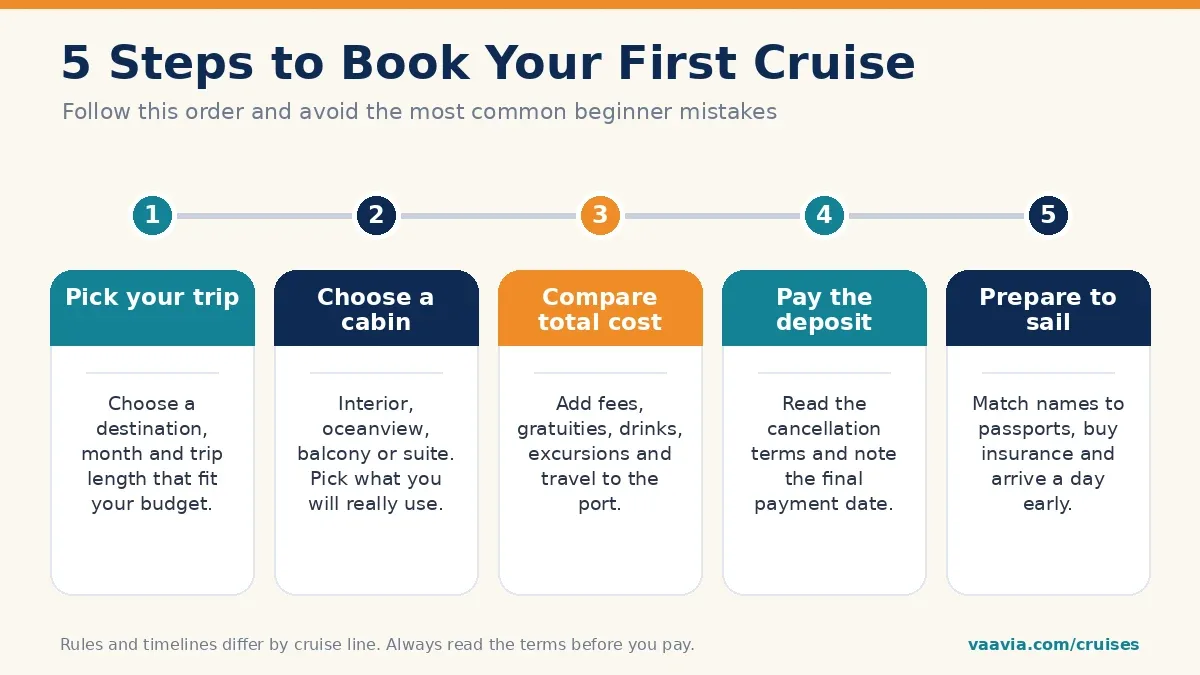
Start with three questions. Where do you want to go, when can you travel, and how long do you want to be away? A short three- or four-night sailing is a good way to test cruising for the first time. A seven-night trip gives you more time to relax and see multiple ports. Your budget and school or work schedule will narrow the options quickly.
Step 2: Choose a Cabin
Cabin type is one of the biggest drivers of price. Interior cabins cost the least, oceanview cabins add a window, balcony cabins add private outdoor space, and suites add extra room and perks. Pick the category that matches how much time you will actually spend in your room.
Step 3: Compare the Total Cost
Do not compare cruises by the base fare alone. Add port fees, taxes, gratuities, drink packages, shore excursions, and the cost of getting to the port. A slightly higher fare that includes onboard credit or drinks can be better value than a lower fare with nothing included.
Step 4: Pay the Deposit
Once you choose a sailing, you pay a deposit to hold your cabin. Before you pay, read the cancellation schedule, the final payment date, and any rules about changes. Keep your confirmation email and booking number in one safe place.
Step 5: Prepare to Sail
After booking, check that every traveler's name matches their passport, arrange travel to the port, and consider travel insurance. Many cruise lines also ask you to complete an online check-in before departure, so watch for emails from your cruise line.
Choosing Your First Itinerary
If you are new to cruising, popular and easy itineraries are a smart place to start.
Caribbean and Bahamas
These routes depart from many US ports, have frequent sailings, and offer warm weather and beach stops. They are a common first cruise because the trips are short and prices are often lower than longer or more distant itineraries.
Alaska
Alaska is known for glaciers, wildlife, and mountain scenery. The season is short, usually from about May to September, so popular dates sell out early. Book well in advance, especially if you want a balcony cabin.
Europe and the Mediterranean
European cruises offer culture, history, and food at every stop. They usually require more planning, such as passports, flights, and hotel nights before or after the cruise, so they are better once you are comfortable with how cruising works.
Choosing the Right Cabin
Your cabin is your home base, but most cruisers spend only a small part of the day in it. Think about how you travel before you spend extra.
- Interior cabin: Lowest price and no window. Good if you are out on deck or at activities most of the day.
- Oceanview cabin: A window brings natural light and helps the room feel larger.
- Balcony cabin: Private outdoor space, great for scenic routes, but usually much more expensive.
- Suite: The highest price, with extra space and benefits such as priority boarding.
Ask about a guaranteed cabin if you want to save. You choose a category, and the cruise line assigns the exact room later. It can cost less and sometimes results in an upgrade, but you cannot choose the location. Families and groups should also ask about connecting cabins, which sell out early.
What Is Included and What Costs Extra
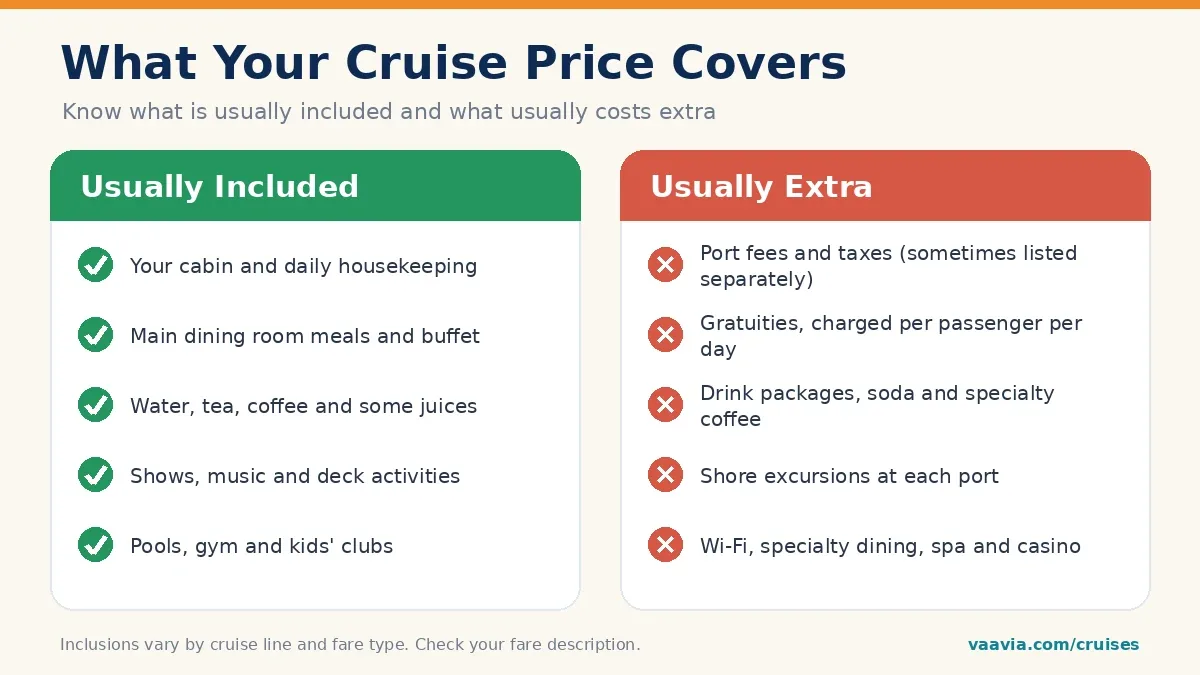
This is where many first-time cruisers are surprised. The base fare covers the essentials, but extras can add up quickly.
| Item | Usually Included? | What to Check |
|---|---|---|
| Cabin and housekeeping | Yes | Cabin category and location |
| Main dining meals and buffet | Yes | Specialty restaurants are often extra |
| Water, tea, coffee | Yes | Soda and specialty coffee may cost extra. |
| Shows and entertainment | Yes | Some activities may have a fee. |
| Port fees and taxes | Sometimes | May be listed separately from the fare |
| Gratuities | Usually extra | Charged per passenger, per day |
| Drink packages | Usually extra | Check whether a promotion includes one. |
| Shore excursions | Extra | Compare ship tours with independent options. |
| Wi-Fi, spa, casino | Extra | Decide what you really need. |
Always read the fare description for the exact sailing you are booking, since inclusions vary between fares and promotions.
Understanding Deposits and Payment Dates
A cruise reservation has several key dates. Missing one can cost you money or even your booking.
The Deposit
The deposit holds your cabin. The amount varies by cruise line, cabin type, and promotion. Some deposits are fully refundable until a certain date, while others are partly or fully non-refundable once paid, so read the terms before you pay.
The Final Payment Date
The balance is usually due about 60 to 90 days before sailing, and sometimes earlier for longer or luxury voyages. Put this date in your calendar as soon as you book. If you pay late, the cruise line may cancel your booking.
Cancellation Schedule
Most cruise lines use a sliding scale. Cancel early and you may lose little or nothing. Cancel closer to departure, and the penalty increases until the fare becomes fully non-refundable. Ask for the exact schedule in writing.
Price Drops After You Book
Fares can fall after you book. Many cruise lines will adjust your price or offer onboard credit if the fare drops before final payment, but policies vary. Ask about this before you book, and check prices periodically.
Passports, Names, and Travel Documents
Documents are one of the most common causes of problems for beginners.
- Check your passport. A valid passport is generally the safest option for cruising, and many itineraries require one. Requirements depend on your citizenship and itinerary, so confirm them with the cruise line and official government sources.
- Match names exactly. The name on your booking must match the name on your passport. A name change or correction after booking can be difficult and sometimes costly.
- Check expiration dates. Some countries require your passport to be valid for several months beyond your travel dates.
- Children and minors. Traveling with kids may require extra documents, such as birth certificates or a parental consent letter if only one parent is traveling.
Getting to the Port
Most cruises depart from a port city, so you may need flights, a hotel, parking, or transfers. Compare cheap flight deals early, and book flights that arrive at least a day before sailing. A flight delay or a missed flight is one of the most common ways travelers miss a ship, and the cruise line will not wait.
If you book flights separately from your cruise, check the airline refund policy and flight change rules in case your plans shift. Some cruise lines sell air-and-sea packages, which can be convenient, but you may have less control over airlines and times.
Cruise Travel Agent vs Booking Direct
A cruise travel agent or cruise booking agent can help you compare ships, cabins, and promotions without checking every website yourself. Agents often have access to group rates, onboard credit, and exclusive offers, and they can help with cruise reservations if your plans change.
Most agents are paid by the cruise line, so ask whether any service fee applies. Booking direct with the cruise line also works well, especially if you already know exactly what you want. A smart approach is to compare the cruise line's price with an agent's quote and choose the offer with the best total value, including extras and support after booking.
Are Cruise Vacation Packages Worth It?
Cruise vacation packages bundle the cruise with flights, hotels, or transfers. They can simplify planning, which many first-time cruisers like. The trade-off is flexibility, since changes can be harder when everything is bundled.
Compare the package price with booking each piece yourself. Check what is included, what is not, and the cancellation rules for every part. A package that adds onboard credit or a pre-cruise hotel night can be a good deal, but only if the total is lower than booking separately.
Common Beginner Mistakes
- Comparing only the base fare. Extras such as gratuities, drinks, and excursions can add significantly to the total.
- Booking too late for popular sailings. Alaska, Europe, and holiday trips fill up early.
- Missing the final payment date. Always add it to your calendar.
- Not reading the cancellation terms. Know what you will lose if plans change.
- Name mismatches. A typo can cause delays or extra fees.
- Flying in on the day of departure. Arrive a day early to avoid a missed ship.
- Skipping travel insurance. It can protect an expensive trip from cancellations, illness, and delays.
- Booking the cheapest cabin without thinking. Choose a cabin that matches how you travel.
Before You Pay: 6-Point Checklist
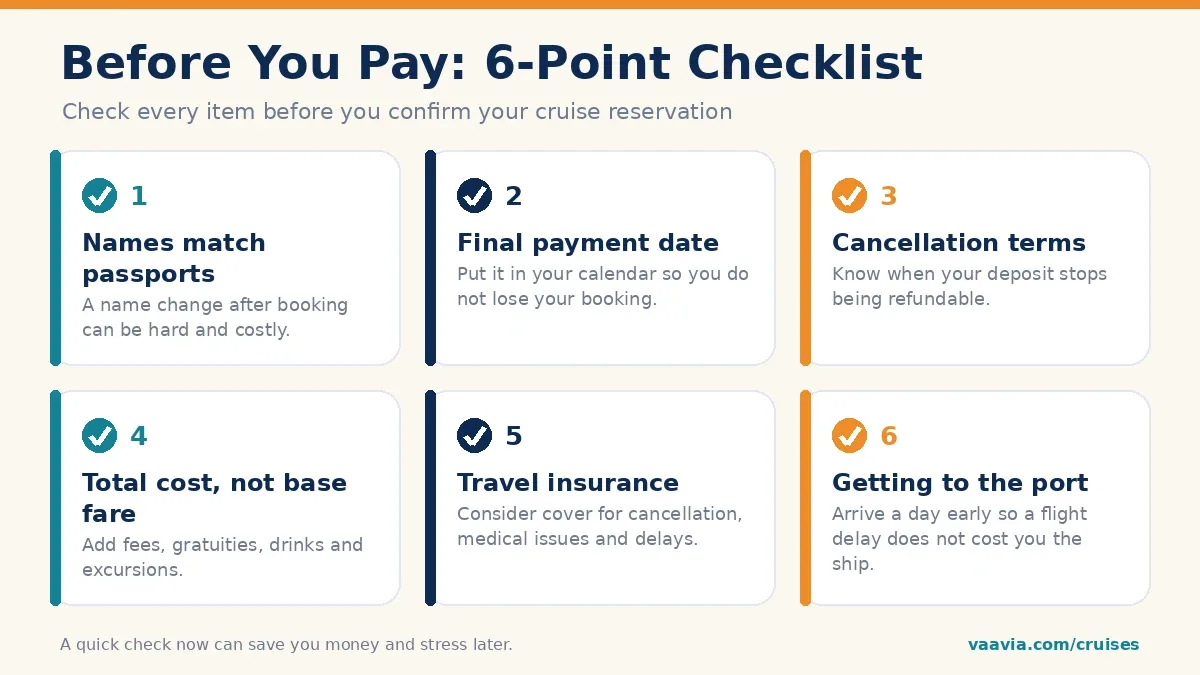
Go through these six items before you confirm your cruise reservation:
- Names match passports. Check every traveler.
- Final payment date. Put it in your calendar.
- Cancellation terms. Know when your deposit stops being refundable.
- Total cost. Add fees, gratuities, drinks, and excursions.
- Travel insurance. Consider cover for cancellation, medical issues, and delays.
- Getting to the port. Plan to arrive a day early.
If you can tick every box, you are ready to book with confidence.
Plan Your Cruise With Vaavia
A first cruise should be exciting, not stressful. Start with a destination and a budget, pick a cabin that fits how you travel, compare the total cost, and read the payment and cancellation rules before you commit.
Vaavia can help you compare cruise options, understand what is included, and find a trip that fits your plans. Browse current cruises, or request a callback to talk through your questions with a booking specialist.
Frequently Asked Questions
How does cruise booking work?
You choose a sailing, pick a cabin, pay a deposit to hold it, and pay the balance by the final payment date. You then complete check-in and bring the right travel documents.
How much is the deposit for a cruise?
It varies by cruise line, cabin type, and promotion. Some offers include reduced deposits. Check the exact amount and whether it is refundable before you pay.
When is the final payment due?
Usually about 60 to 90 days before sailing, and sometimes earlier for longer or luxury voyages. Confirm the date in your booking terms.
What is not included in the cruise price?
Common extras include gratuities, drink packages, shore excursions, specialty dining, Wi-Fi, and spa services. Port fees and taxes may be listed separately.
Should I use a cruise travel agent?
It can help, especially for comparing options and handling changes. Most agents are paid by the cruise line, but ask about service fees before you book.
Is travel insurance worth it for a cruise?
Many travelers choose it because cruises are expensive and often non-refundable close to departure. Compare what each policy covers, including cancellation, medical care, and delays.
How early should I arrive at the port city?
Plan to arrive at least a day before departure. This protects you from a flight delay or a missed flight.
Can I change my cruise booking after I pay?
Often yes, but fees and rules depend on the cruise line and how close you are to sailing. Changes to names, dates, or cabins are easier earlier, so contact the cruise line or your agent as soon as you know.