Aviation History & Great Circle Navigation
The journey from Sydney Kingsford Smith to Los Angeles International traces a modified Great Circle trajectory arcing northeast across the South Pacific. Commercial air links across this corridor date back to the pioneering flying boat services of the 1940s, transitioning through Boeing 707 and 747 'Jumbo Jet' eras before modern twin-engine ETOPS (Extended-range Twin-engine Operational Performance Standards) unlocked revolutionary non-stop efficiency.
Modern wide-body airliners like the Boeing 787-9 Dreamliner and Airbus A350-900 navigate precise oceanic tracks governed by satellite-based ADS-C (Automatic Dependent Surveillance-Contract) and CPDLC (Controller-Pilot Data Link Communications). Eastbound flights capitalize on high-altitude jet streams curving eastward from the Coral Sea toward Southern California, frequently cutting up to 45 minutes off scheduled airborne transit times.
Aircraft Modernization & Cabin Atmosphere
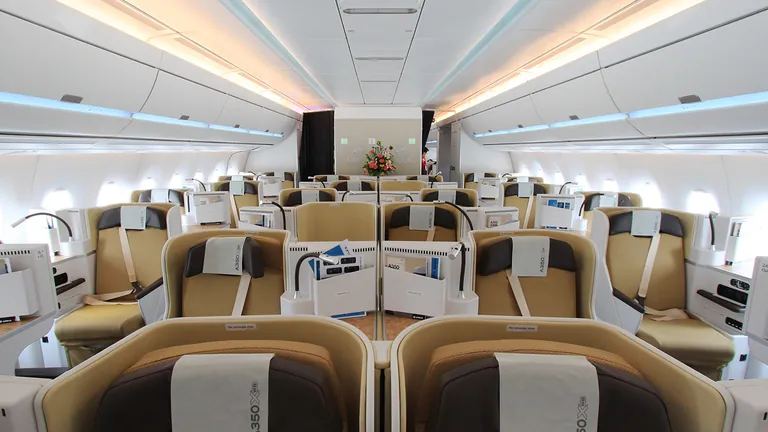
Operating an ultra-long-haul sector of nearly 14 hours demands the highest standards of passenger wellness. Both the Boeing 787 and Airbus A350 utilize advanced carbon-fiber composite fuselages that permit cabin pressurization to an equivalent altitude of 6,000 feet (compared to 8,000 feet on legacy aluminum aircraft). This higher atmospheric pressure, paired with hospital-grade HEPA filtration and higher relative humidity levels, drastically curtails dehydration, eye strain, and physical fatigue.
Acoustic insulation advancements have also reduced interior engine noise levels by over 50% compared to earlier aircraft generations. Passengers can comfortably listen to audio without maxing volume controls, converse effortlessly across cabin aisles, and rest undisturbed during long transoceanic night sectors.
Pacific Jet Streams, Weather & Arrival Considerations
Weather patterns over the Central Pacific play a defining role in flight dynamics. During Northern Hemisphere winters, energetic polar jet streams dip south across California, accelerating eastbound speeds while requiring westbound flights from LAX to fly slightly longer dog-leg tracks toward New Zealand and eastern Australia to minimize headwind resistance.
Approaching Southern California, morning flights frequently encounter coastal marine fog layers known locally as 'June Gloom'. Modern precision instrument landing systems (ILS CAT IIIb) at LAX ensure smooth automated touchdowns even during periods of restricted coastal ceiling visibility, allowing travelers to maintain reliable onward connections across the United States.
Flight Corridor Geography & Navigation
The flight trajectory between Sydney and Los Angeles follows an optimized Great Circle or airway corridor designed by international air traffic control agencies to maximize fuel efficiency and take advantage of seasonal atmospheric winds. Navigating across multiple airspace boundaries and regional Flight Information Regions (FIRs), pilots utilize modern Performance-Based Navigation (PBN) and Required Navigation Performance (RNP) specifications.
Modern commercial aircraft such as the Boeing 787 Dreamliner, Airbus A350, Boeing 777, and Airbus A330 feature advanced flight management computers that continuously calculate optimal cruising altitudes and stepped climbs. By adjusting speed and altitude in real time, flight crews minimize fuel burn, avoid localized convective turbulence, and ensure reliable on-time arrival performance.
Cabin Atmosphere & Long-Haul Passenger Wellness
Passenger comfort during a flight of approximately 13h 50m is significantly enhanced by modern aircraft design. Next-generation composite airliners feature advanced environmental control systems that maintain cabin pressurization at an equivalent altitude of 6,000 feet, which is roughly 2,000 feet lower than traditional legacy aircraft. This lower cabin altitude enables higher oxygen absorption, noticeably reducing headaches, dizziness, and post-flight fatigue.
To ensure optimal wellness in flight, travelers are advised to maintain active hydration by drinking at least 250 ml of water per flight hour. Periodic in-seat stretches, calf flexes, and walking through the cabin aisles during cruising flight stimulate blood circulation, significantly reducing the risk of deep vein thrombosis (DVT) and lower-limb swelling on long sectors.
Airport Transit & Arrival Logistics
Upon touching down at Los Angeles (LAX), passengers follow clearly designated terminal signage toward international passport control and customs declaration halls. Travelers connecting to onward regional or domestic flights should verify whether their baggage has been checked through to their final destination or if local regulations mandate retrieving luggage at the initial port of entry for border inspection.
Ground transportation options from Los Angeles airport encompass rapid express rail links, scheduled airport coach shuttles, metered municipal taxis, and app-based rideshare pick-up zones. Pre-booking ground transit or purchasing digital transit cards in advance ensures a smooth transition from the arrival terminal to your hotel or corporate destination.
Alliance Loyalty & Frequent Flyer Advantages
Travelers flying the Sydney to Los Angeles corridor across global alliances (Oneworld, Star Alliance, and SkyTeam) earn valuable tier-qualifying points and redeemable frequent flyer miles. Top-tier frequent flyers enjoy dedicated priority check-in queues, expedited security access (Fast Track), increased checked baggage allowances, and worldwide business and first class lounge access regardless of the booked travel class.
When reserving flights through Vaavia, your frequent flyer membership number can be seamlessly linked to your reservation, ensuring tier status credits, seat selection privileges, and partner accruals are recognized across all flight sectors.







 IATA accredited & CLIA member