





What Is a Red-Eye Flight? Pros, Cons, and Tips for Overnight Travel
Updated for 2026-2027 travel. Flight schedules, fares, and airline policies change often, so confirm details with your airline before you book.

Last updated Oct 22, 2026
If you have ever seen a flight that leaves at 11 p.m. and lands at 6 a.m., you have seen a red-eye. So, what is a red-eye flight? It is an overnight flight that departs late in the evening or at night and arrives early the next morning, so you travel while most people are asleep. These flights can save money and time, but they are not for everyone. This guide explains how they work, the pros and cons, and how to make the trip easier. When you are ready to compare overnight options, you can browse flights and look at departure and arrival times side by side.
If you are still deciding when to buy, our guide to the best time to book flights shows how timing affects the fare, including for late-night departures.
By the end of this article, you will know whether a red-eye flight is a smart choice for your trip, how to choose the right one, and what to do before, during, and after the flight.
On This Page
- What Is a Red-Eye Flight?
- Why Is It Called a Red-Eye?
- How a Red-Eye Flight Works
- Red-Eye Flight Pros and Cons
- Red-Eye vs Daytime Flight
- Who Should Take a Red-Eye?
- Who Should Avoid a Red-Eye?
- Are Red-Eye Flights Cheaper?
- How to Choose the Best Red-Eye Flight
- Red-Eye Flight Tips: Before You Fly
- Red-Eye Flight Tips: On the Plane
- Red-Eye Flight Tips: After You Land
- Red-Eye Flights With Kids
- Common Mistakes to Avoid
- Quick Checklist
- Plan Your Trip With Vaavia
- Frequently Asked Questions
What Is a Red-Eye Flight?
A red-eye flight is a flight that takes off late at night and lands the next morning. Most departures are in the late evening or around midnight, and most arrivals happen before sunrise or in the early morning. In the USA, red-eyes are especially common on long coast-to-coast routes, such as flights between the West Coast and the East Coast, because the time difference and flight length line up with an overnight schedule.
There is no single official definition. Airlines and travelers use the term for any overnight flight where you are expected to sleep, at least a little, during the trip. Flight times vary by route, season, and airline, so always check the exact departure and arrival times when you book.
Why Is It Called a Red-Eye?
The name comes from the way many people feel after an overnight flight. When you do not get enough sleep, your eyes can look red and tired. The phrase stuck, and now it simply describes any night flight that leaves you arriving bleary-eyed in the morning.
How a Red-Eye Flight Works
A red-eye follows a simple pattern. You board in the evening, the cabin lights dim after takeoff, and you spend the night flying. You land early the next day, ready to start your trip.
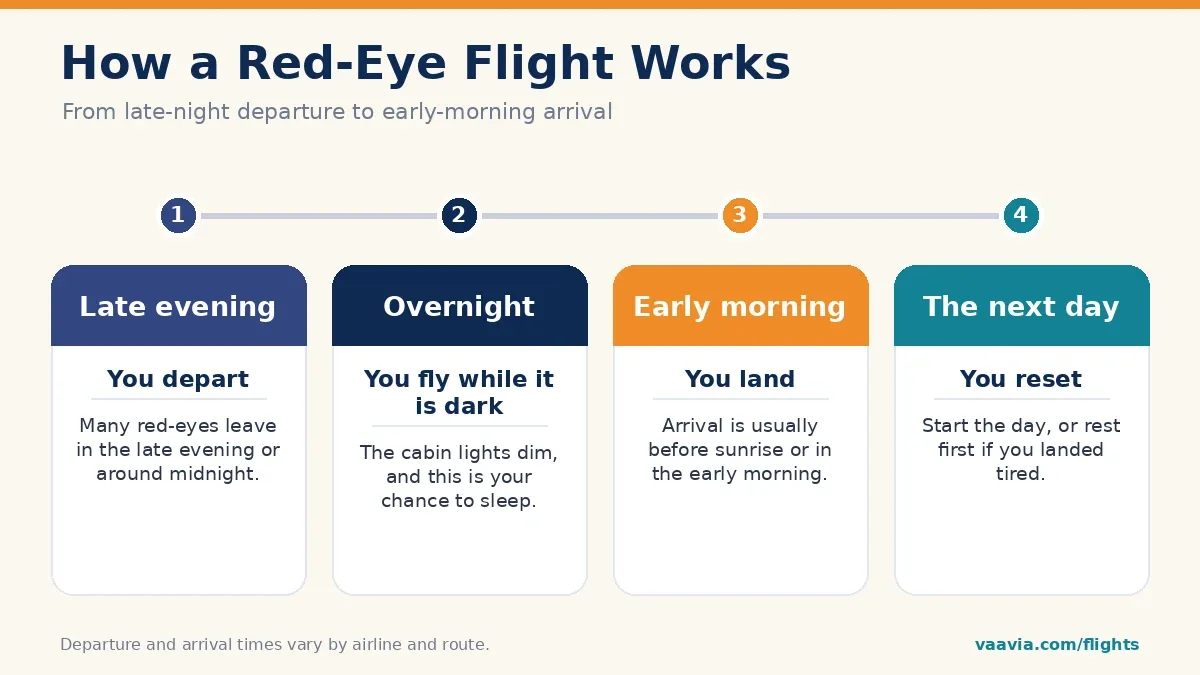
Late Evening Departure
Most red-eye flights leave between about 9 p.m. and midnight. Airports are often quieter at that time, with shorter lines and fewer crowds than daytime.
The Overnight Flight
Once the plane is in the air, the cabin usually dims, meal service may be shorter, and passengers are encouraged to rest. Cabin temperature and noise can make sleeping harder than it sounds, so many travelers prepare ahead.
Early Morning Arrival
You usually land before or soon after sunrise. This can be useful, since you have the whole day ahead, but your hotel room may not be ready yet.
The Next Day
How you feel depends on how well you slept, how long the flight was, and how many time zones you crossed. Many travelers plan a light first day.
Red-Eye Flight Pros and Cons
Overnight travel has real advantages and real drawbacks. Here is how they compare.
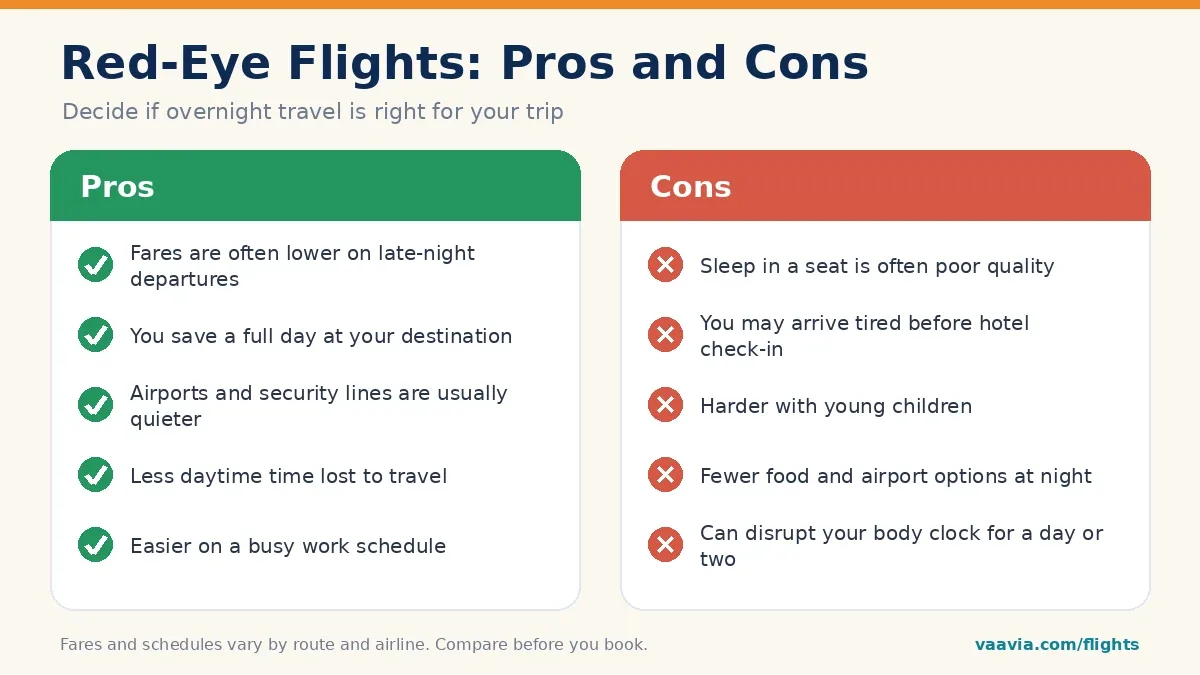
Pros of a Red-Eye Flight
- Lower fares: Late-night flights are often cheaper than popular daytime departures, though this is not guaranteed on every route.
- You save a day: You can work or sightsee during the day, travel at night, and arrive ready for the next morning.
- Quieter airports: Security lines and terminals are often calmer late at night.
- Fewer daytime commitments lost: You do not need to give up a full day of your trip just to travel.
- Good for tight schedules: Business travelers can finish a workday, fly overnight, and arrive in time for morning meetings.
Cons of a Red-Eye Flight
- Poor sleep: Sleeping upright in a cramped seat is hard for many people.
- Fatigue on arrival: You may feel tired for much of the next day.
- Early arrival problems: Hotel check-in is often in the afternoon, so you may need to wait or pay for early access.
- Harder with children: Young kids may be cranky or unable to sleep.
- Body clock disruption: Combined with a time-zone change, it can take a day or two to feel normal.
- Limited food options: Many airport restaurants close at night, and onboard meals may be limited.
Red-Eye vs Daytime Flight
If you are not sure which one to book, this comparison can help.
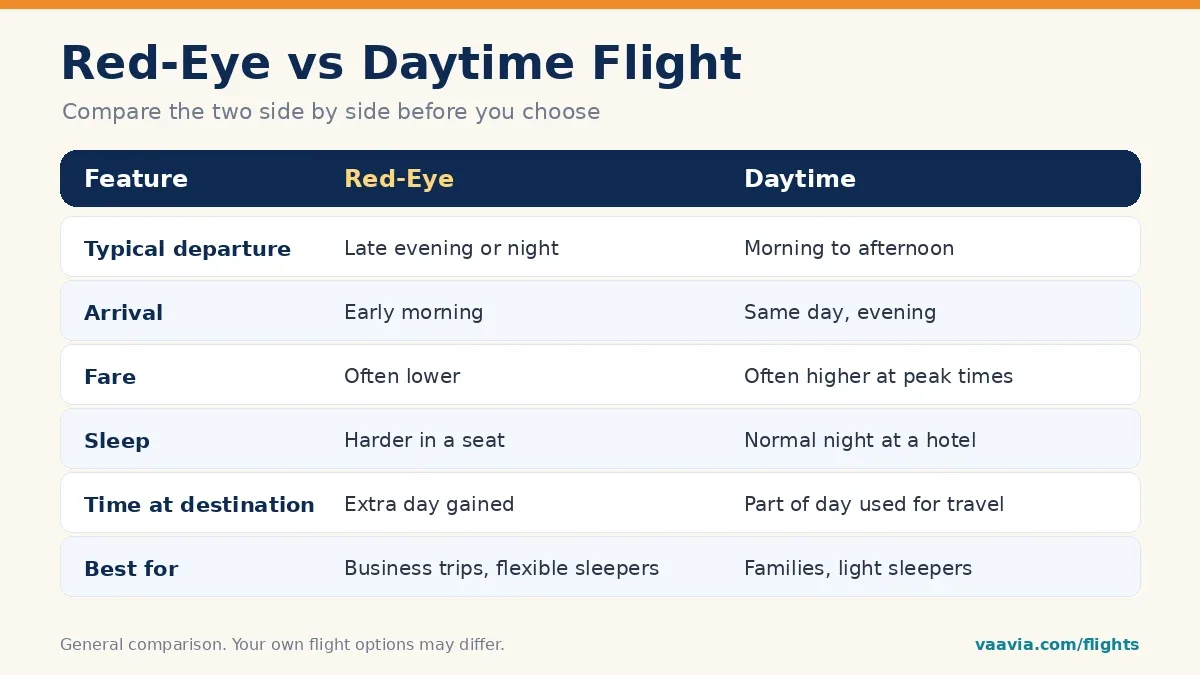
| Feature | Red-Eye Flight | Daytime Flight |
|---|---|---|
| Typical departure | Late evening or night | Morning to afternoon |
| Arrival | Early morning | Same day, often evening |
| Fare | Often lower | Often higher at peak times |
| Sleep | Harder in a seat | Normal night at a hotel |
| Time at destination | You gain an extra day | Part of the day is used for travel. |
| Best for | Business trips and flexible sleepers | Families and light sleepers |
Neither choice is better for everyone. The right one depends on your budget, your sleep habits, and what you need to do when you land.
Who Should Take a Red-Eye?
A red-eye flight can be a great choice if you:
- Fall asleep easily on planes, in cars, or in unfamiliar places
- Want to save money and are flexible about your schedule
- Have a packed itinerary and want to maximize your time at your destination
- Are traveling for work and need to arrive for a morning meeting
- Are on a long coast-to-coast route where the flight time suits an overnight trip
Who Should Avoid a Red-Eye?
You may want a daytime flight if you:
- Struggle to sleep anywhere except your own bed
- Have health conditions that make fatigue riskier, in which case ask your doctor
- Are traveling with infants or small children who need a regular sleep routine
- Need to drive or work soon after you land
- Have a very early arrival problem, such as no way to store luggage or reach your hotel
Are Red-Eye Flights Cheaper?
Often, but not always. Late-night flights are less popular with many travelers, so airlines sometimes price them lower to fill seats. On busy routes and holiday weekends, red-eye fares can be just as high as daytime fares.
- Compare several times of day. Use a flexible search to see morning, afternoon, and overnight prices.
- Check the total cost. A cheaper red-eye can cost more if you need an extra hotel night or early check-in.
- Look at nearby dates. Moving your trip by a day can change the fare.
- Watch baggage and seat fees. Basic fares may charge for bags and seat selection, which adds up.
How to Choose the Best Red-Eye Flight
Not all red-eyes are equal. A few details can make the trip much easier.
- Departure time: Leaving a little earlier in the evening gives you more time to eat and board without rushing.
- Arrival time: Landing at a reasonable hour makes airport transfers easier.
- Nonstop vs connection: A nonstop flight lets you sleep longer. A connection can break up your rest and increase the risk of a missed flight if the first leg is delayed.
- Flight length: On a long coast-to-coast flight, you get more hours to sleep. On a very short flight, you may barely rest.
- Seat options: Check the seat map and fare rules. Window seats are popular with sleepers, and extra legroom can help.
- Aircraft type: Some planes have more comfortable seats or quieter cabins, if you can check.
Red-Eye Flight Tips: Before You Fly
Preparation makes a big difference. Here is a simple plan.
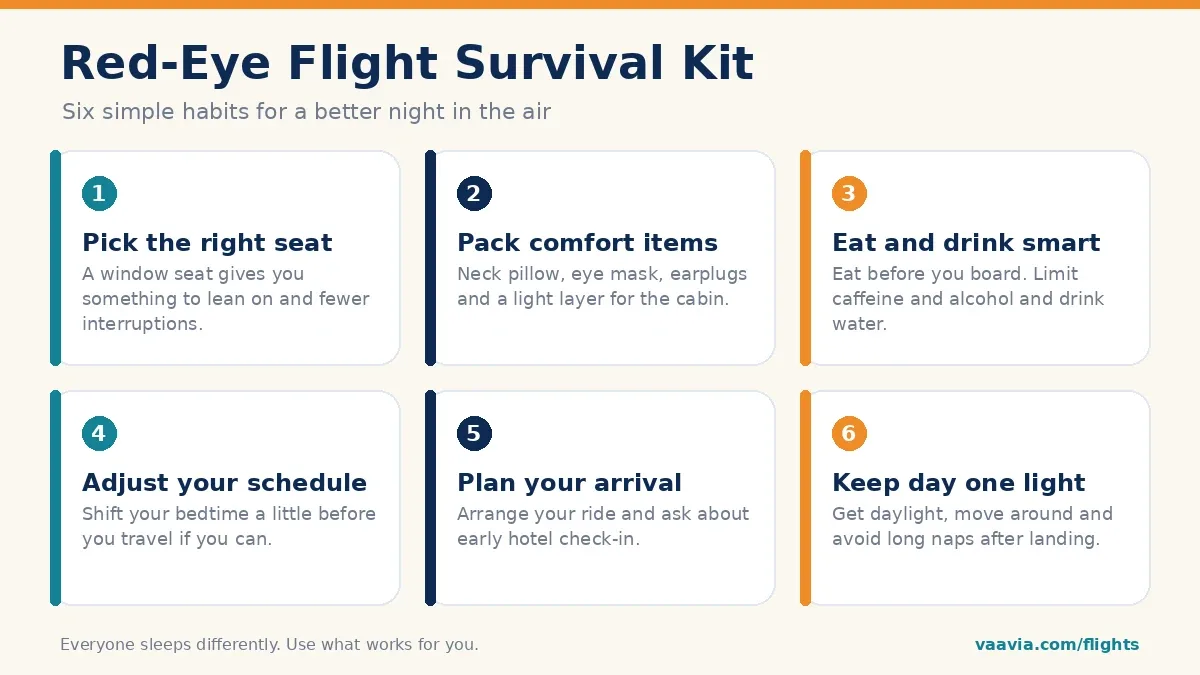
- Pick the right seat. A window seat gives you something to lean on and fewer interruptions from neighbors. An aisle seat gives you freedom to stretch. Choose what suits you.
- Pack comfort items. A neck pillow, eye mask, earplugs or noise-canceling headphones, and a light sweater or blanket can improve sleep.
- Eat before you board. Food options can be limited late at night, so have a proper meal before the flight.
- Adjust your schedule. If you can, shift your bedtime slightly in the days before you travel.
- Dress comfortably. Wear loose, layered clothing and comfortable shoes.
- Charge your devices. Download shows, music, or podcasts in case you cannot sleep.
Red-Eye Flight Tips: On the Plane
- Get settled quickly. Once you board, put away your bag, set up your pillow and mask, and get comfortable.
- Limit caffeine and alcohol. They can disrupt sleep and leave you dehydrated.
- Drink water. Cabin air is dry, and staying hydrated helps you feel better on arrival.
- Skip heavy meals. A light snack is easier on your body than a large meal right before sleep.
- Keep the lights low. Use your mask, dim your screen, and avoid bright reading lights if you want to sleep.
- Move now and then. If you wake up, stretch your legs or walk the aisle when it is safe to do so.
- Set an alarm. If you have an early connection or transfer, make sure you do not oversleep.
Red-Eye Flight Tips: After You Land
- Get daylight. Morning sunlight helps reset your body clock.
- Keep your first day light. Plan easy activities instead of a packed schedule.
- Avoid long naps. A short nap is fine, but a long one can make it harder to sleep that night.
- Ask about early check-in. Some hotels allow it or at least can store your luggage.
- Have a plan for your arrival. Arrange a ride in advance so you do not wait around when you are tired.
- Eat and drink well. A good breakfast and plenty of water can help you feel more alert.
Red-Eye Flights With Kids
Red-eye flights can work with children, but they need extra planning.
- Consider your child's sleep habits. Some kids sleep well on planes, while others are wired and cranky.
- Choose seats carefully. Seat selection matters, since you want everyone together. Pay close attention to seat fees and family seating rules before you book.
- Bring comfort items. A favorite blanket, pajamas, and a small toy can help children settle.
- Keep to a routine. A familiar bedtime routine before boarding may help your child sleep.
- Think about infants. A lap infant does not have their own seat, and some airlines require a call to add a lap infant to a reservation.
- Allow extra time. Airports and boarding take longer with children.
Common Mistakes to Avoid
- Booking a red-eye without checking arrival time. Landing at 4 a.m. with no ride or hotel plan can be stressful.
- Not planning the first day. A packed itinerary after a sleepless night is a recipe for exhaustion.
- Choosing a risky connection. A tight layover on an overnight itinerary raises the risk of a missed flight.
- Skipping comfort items. A pillow and eye mask are small purchases that help a lot.
- Drinking too much alcohol or coffee. Both can disrupt sleep.
- Ignoring baggage rules. Check fees and size limits before you leave home.
- Forgetting about the refund policy. If your plans may change, check flight change rules, date change fees, and the airline refund policy before paying.
- Assuming it is always cheaper. Compare the full cost, including hotels and transfers.
Quick Checklist
Before you book your red-eye flight, ask yourself:
- Can I sleep on a plane, at least a little?
- Is the fare lower than comparable daytime flights?
- Is the arrival time workable for my plans?
- Do I have a ride and a place to go when I land?
- Have I checked baggage, seat, and change rules?
- Do I have comfort items packed?
- Have I planned a light first day?
If you can answer yes to most of these, a red-eye may be a smart choice.
Plan Your Trip With Vaavia
A red-eye flight can be a smart way to save time and money, especially on long routes, if you are prepared for a short night. Compare overnight and daytime options, check the full cost, and pick the schedule that fits your sleep habits and your plans.
Vaavia can help you compare flights, understand fare rules, and find a schedule that works for you. Browse current flights, or request a callback to talk through your options with a booking specialist.
Frequently Asked Questions
What is a red-eye flight?
A red-eye flight is an overnight flight that leaves late in the evening or at night and arrives early the next morning.
Why is it called a red-eye flight?
The name comes from the tired, red eyes many travelers have after a night flight with little sleep.
Are red-eye flights cheaper?
Often, because they are less popular, but not always. Compare fares across different times of day and check the total cost, including any extra hotel night.
How long is a typical red-eye flight?
It depends on the route. Many red-eyes in the USA are long coast-to-coast flights, but the length varies by route, so check your itinerary.
Is a red-eye flight a good idea?
It can be, if you can sleep on planes, want to save money, or need to arrive early. It may be less suitable if you struggle to sleep or are traveling with young children.
How do I sleep on a red-eye flight?
Choose a comfortable seat, bring a neck pillow, eye mask, and earplugs, avoid heavy meals, caffeine, and alcohol, and keep the cabin lights low.
What should I do when I land after a red-eye?
Get some daylight, drink water, keep your first day light, and avoid long naps. Ask your hotel about early check-in or luggage storage.
Can I take a red-eye flight with kids?
Yes, with extra planning. Think about your child's sleep habits, choose seats together, bring comfort items, and allow extra time at the airport.